
I’ve spent the last several months working with a client in a regulated environment. We haven’t been building AI. We’ve been mapping data and processes: where each number comes from, which systems it passes through, where the silos are, what lives in Excel, who touches it and who’s allowed to see it.
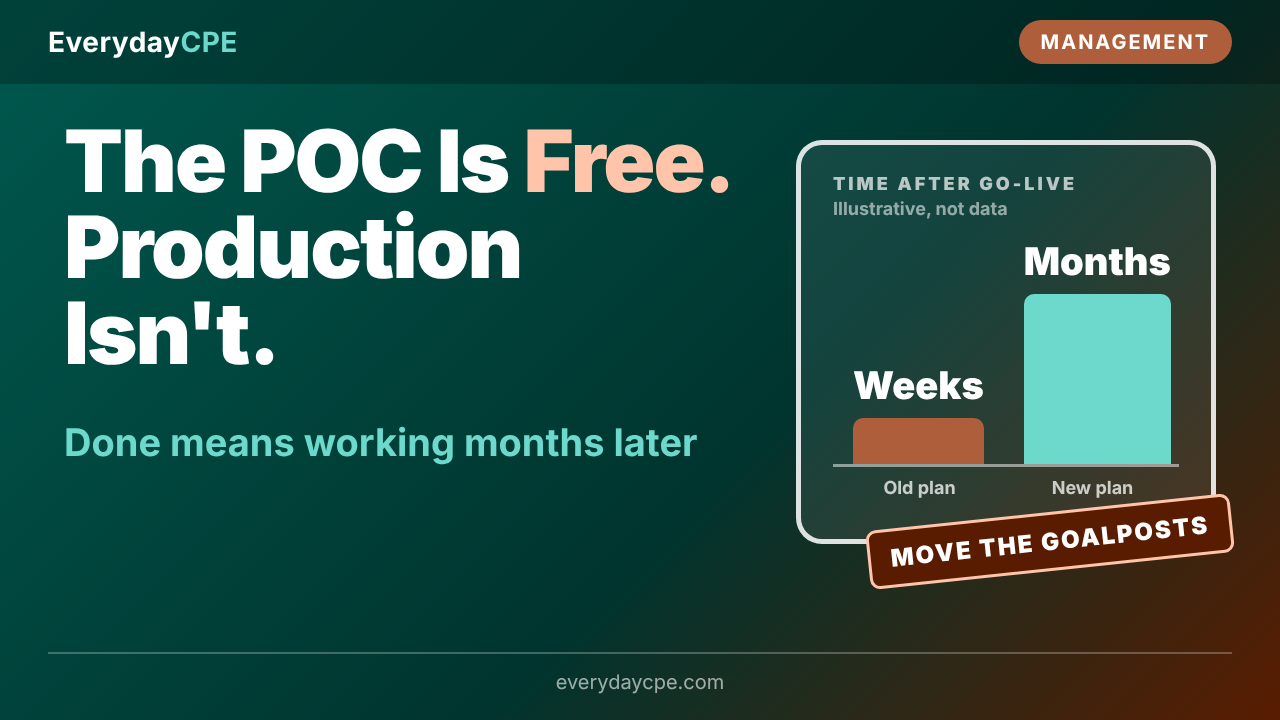
We’re just now starting to see results from that work. Fully taking advantage of it is still months away. That’s not a sign anything went wrong. It’s how long it takes to set up systems that work, pass security review and hold up to governance in a regulated business.
Two reports out this month back that up.
AI is paying off. The data isn’t ready.
Further, a data and AI services firm, surveyed 515 U.S. AI decision-makers and published the results on October 13 (Pure AI). 77% said AI was already producing a positive return. Only 5% said their data was largely ready for AI. Only 29% had done a formal data audit and remediation plan. And 37% had paused, scaled back or abandoned an AI project in the past year, with about a quarter of those pointing to data quality or availability as the main reason.
Further sells this kind of work and didn’t publish much on method, so treat it as a signal, not a precise measurement.
So how can returns be positive when the data isn’t ready? Because most of the early returns come from work that doesn’t depend on clean, governed data. The projects that do depend on clean data are the ones getting paused.
Bad data used to look bad
Every wave of finance technology has hit data first. AI changes one thing. With a spreadsheet, bad data usually looks bad. A total doesn’t foot and someone notices. With AI, bad data comes back as a clear, confident, well-written answer.
A Datarails survey of 270 CFOs, all already using AI, shows the cost (CPA Practice Advisor). 65% said their most common AI frustration was confident answers based on the wrong data. Only 4% had a single source of truth for finance and operational data. Their teams spent about 26% of the week checking or correcting AI output. It’s also a vendor survey, but the point stands: the bottleneck isn’t the model. It’s what the model is reading.
Think of it like renovating an old house
You can paint the walls in a weekend. It looks great and feels like progress. That’s the easy AI work: drafting memos, summarizing contracts, cleaning up an email.
Adding a second floor is different. You need to know what’s inside the walls, where the wiring runs and whether the foundation can carry the weight. And you need permits and an inspector’s sign-off before anyone moves in.
In finance, the second floor is AI on the numbers that matter: the close, reconciliations, revenue, anything an auditor, regulator or board will see. The inspector is real too. Governance, security and compliance have to sign off on how the data moves, who can see it and what the system can do with it.
Regulators are saying it out loud
On October 15, the Financial Stability Board, which coordinates financial regulators across the G20, published its final report on sound practices for adopting AI. One of its 12 practices is data governance: keeping data that is “fit-for-purpose for training, testing, and using AI.” Another covers third-party AI and names data quality there too. If you buy the tool, you still own the data feeding it.
Forbes pointed out that agents add a particular risk because they pull in and reuse data in ways that are hard to detect. And the FSB wants AI folded into existing risk frameworks, which means the same reviews and sign-offs as every other system. That’s where the months go.
What to do with this
Sort your use cases into two buckets. Work next to the numbers, like drafting, summarizing, research and first-pass analysis with a person heavily involved, can move now. Work on the numbers, like the close, reconciliations and anything audited or filed, waits on the foundation. Say that early, so a working pilot in bucket one doesn’t turn into a promise about bucket two.
Treat the foundation as the project, and budget it that way.
- A data inventory: what you have and where it lives
- Ownership: a named person accountable for each key data set
- Lineage: tracing a number on a report back to the system it came from
- Access controls: who and what can see each data set, including AI tools and agents
- Quality checks that run on a schedule, not just when something breaks
None of this is new to finance. AI just raises the cost of skipping it, because the errors come back looking right. If you need a number to justify the budget, use the hours your team spends checking AI output. That’s the cost of the missing foundation.
Key takeaways
- Positive AI returns and unready data can exist side by side. Early returns don’t prove you’re ready for AI on the numbers.
- AI doesn’t fix bad data. It makes bad data sound convincing.
- The FSB names data governance as one of 12 sound practices, and it applies to AI you buy, not just AI you build.
- In a regulated environment, foundation work takes months. Plan for that timeline instead of apologizing for it.
- Split your use cases: next to the numbers can move now, on the numbers waits on the foundation.
Want the CPE credit? Take the full lesson on EverydayCPE and earn 0.2 CPE credits: AI Is Paying Off. The Data Isn’t Ready.
Leave a Reply